Anchorage Small Multifamily Investing for Local and Remote Buyers
April 16, 2026
April 16, 2026
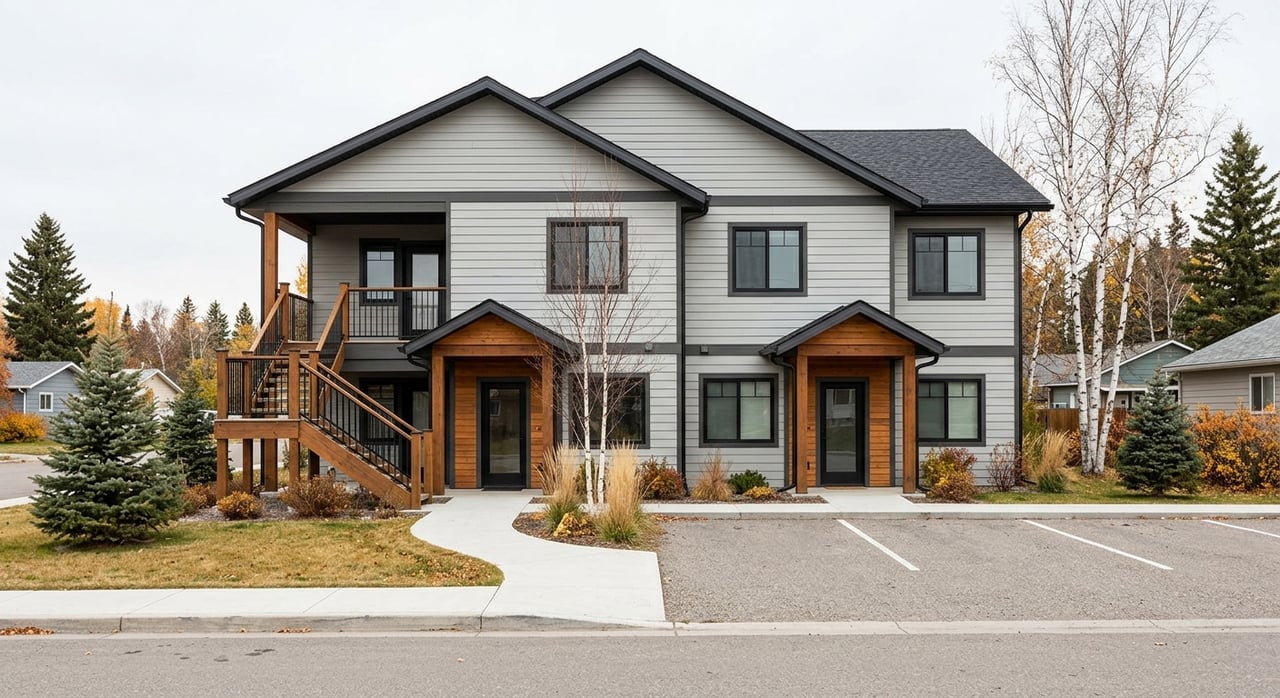
If you are looking for a real estate investment that can balance rental demand, manageable scale, and long-term flexibility, small multifamily property in Anchorage deserves a closer look. Whether you live in Alaska or invest from outside the state, you likely want clear numbers, realistic expectations, and a strategy that fits Anchorage’s climate, tenant base, and pace of the market. This guide walks you through what makes duplexes, triplexes, and fourplexes worth watching in Anchorage, and what to evaluate before you buy. Let’s dive in.
Anchorage is Alaska’s largest city and remains the state’s primary urban housing market. According to the Municipality of Anchorage’s Annual Comprehensive Financial Report and JBER-related economic overview, the city is home to about 40% of Alaska residents and added about 4,000 jobs in 2023.
That matters to you as an investor because Anchorage tenant demand is supported by multiple sectors rather than one single employer. The local economy includes military activity tied to Joint Base Elmendorf-Richardson, healthcare, education, public administration, and logistics activity near the port and airport, all of which help support a broad renter base.
Anchorage continues to show meaningful renter demand. The Municipality’s 2024 housing progress report found that 32.14% of renters were rent burdened, and the city uses a 5% rental vacancy target as a benchmark for balance.
The Alaska Housing Finance Corporation’s 2025 rental market survey reported a 5.6% vacancy rate for Anchorage Municipality, up from 4.6% in 2024. In practical terms, that suggests the market has loosened somewhat, but it is not oversupplied.
For many investors, small multifamily offers a middle ground between a single rental home and a larger apartment building. A duplex, triplex, or fourplex can spread risk across multiple units while still feeling more approachable to finance, maintain, and manage.
That format can be especially appealing in Anchorage, where housing policy has been moving toward more support for small attached and infill housing. The Municipality’s housing and zoning resources show an active effort to reduce barriers for triplexes, fourplexes, ADUs, and similar housing types.
Limited supply can be part of the investment story. In Anchorage’s 2024 progress report, the city tracked only 19 newly constructed duplex, triplex, and fourplex units in 2023, compared with 99 detached units and 45 multi-unit buildings with 5 or more units.
The same municipal housing resources note that Anchorage built only about 100 multifamily units in the prior year and has taken steps to reduce some design-related costs for new multifamily development. If you are buying existing small multifamily, that limited pipeline may support continued interest in well-located, well-maintained properties.
If you are underwriting a deal, current rent benchmarks matter. According to AHFC’s 2025 rental market survey, median contract rent in Anchorage Municipality was $1,404, while median adjusted rent was $1,565.
For Anchorage city proper, the figures were similar at $1,390 contract rent and $1,557 adjusted rent. AHFC also noted that two-bedroom apartments are the most common unit type in the survey, and the median adjusted rent for a two-bedroom in Anchorage was $1,610, up 3.9% year over year.
In Anchorage, the difference between contract rent and adjusted rent is not just a technical detail. It reflects the local reality that utilities and winter services often play a major role in property operations.
AHFC’s survey shows that in Anchorage Municipality, 74.6% of units included heat in the rent, 77.3% included hot water, 92.6% included refuse, and 89.9% included snow plowing. The gap between median contract rent and median adjusted rent was about $160 per month, which is a meaningful line item when you are estimating cash flow.
Anchorage is not acting like a deeply discounted market. The research report shows Zillow placing Anchorage’s average home value at $405,601 with a median sale price of $394,667 as of early 2026, while Redfin reported a $425,000 median sale price in February 2026 and a 98.7% sale-to-list ratio.
The same data suggests you may need to move quickly when the right property appears. Homes were reported to sell in 22 days, and Zillow showed median days to pending at 16, so investors should be prepared with financing, criteria, and decision-making systems in place.
Using Anchorage’s 2025 rent benchmark and current sale-price benchmarks, the research report notes that a rough gross rent-to-price check lands in the mid-4% range before expenses. That is only a screening tool, not a full investment model.
For small multifamily, your actual result will depend on unit mix, utility structure, maintenance needs, snow handling, heating systems, vacancy, and how efficiently the property is managed. In Anchorage, those operating details can make a major difference between a property that looks good on paper and one that performs in the real world.
If you are considering redevelopment, future additions, or simply want to understand a property’s long-term flexibility, zoning matters. The Municipality’s zoning guidance for residential districts outlines several categories relevant to small multifamily.
R-2A is primarily intended for single- and two-family housing. R-3 is a multifamily district intended for low-rise buildings near commercial, community, and transit-served areas, while R-4 is intended primarily for multifamily and multi-story buildings near downtown, midtown, and other employment centers.
If you are based in Anchorage, your advantage is local visibility. You may be better positioned to notice condition issues, compare blocks and access patterns, and respond quickly when a promising duplex or fourplex comes to market.
Local investors should still stay disciplined. Focus on rental history, utility setup, deferred maintenance, snow removal logistics, and heating-system reliability, since these factors can have an outsized effect on ownership costs in Anchorage.
If you are investing from outside Alaska, Anchorage can still be a compelling market, but remote ownership requires stronger systems. You need reliable property oversight, responsive vendors, and a realistic budget for seasonal operations.
That is especially important because Alaska’s landlord-tenant framework places clear responsibility on habitability and common-area maintenance. The State of Alaska’s Landlord and Tenant Act guide explains that landlords must keep premises fit and habitable, maintain heating and other core systems, provide running water and reasonable hot water and heat, keep common areas clean and safe, and remove snow and ice from common areas.
In many markets, snow removal is a line item. In Anchorage, it is part of the operating backbone of the property.
The Alaska guide also distinguishes between landlord responsibility for snow and ice in common areas and tenant responsibility for snow and ice on leased premises. For a remote investor, that usually means having a local property manager and dependable snow and heating vendors is a practical operating decision, not an optional convenience.
Remote owners often do better when they treat management as part of the investment plan from day one. In Anchorage, that can help you handle winter weather, vendor coordination, tenant communication, maintenance timing, and compliance with deposit handling and habitability standards.
A strong manager can also help you track how lease structure affects net income. Since many Anchorage rentals include heat, hot water, refuse, and snow plowing, management decisions often have a direct impact on your operating margin.
Some investors may also want to evaluate whether a property could be a fit for voucher-supported tenants. The Alaska Housing Finance Corporation’s Housing Choice Voucher program for landlords says participating landlords receive timely and dependable payments, can still screen tenants, and use a one-year initial lease.
The program serves more than 4,000 families statewide and is available in 12 Alaska communities. As with any leasing strategy, the key is making sure the property, management approach, and financial goals align with the program requirements and your overall plan.
Before you pursue a small multifamily property in Anchorage, it helps to review the basics with local conditions in mind.
In a market like Anchorage, good investing is not only about finding a property. It is about buying with the right assumptions, understanding local operations, and planning for the details that shape long-term performance.
That is where local market knowledge can help, especially if you are comparing opportunities, selling an existing rental, or trying to evaluate whether a duplex, triplex, or fourplex fits your goals. Whether you are a local owner or a remote investor, working with a trusted local expert can help you move faster and make better decisions.
If you are exploring small multifamily opportunities in Anchorage or preparing to sell an investment property, Michelle Nelson- offers direct, local guidance with a high-touch approach built for clear communication, thoughtful strategy, and smooth execution.
Stay up to date on the latest real estate trends.

Unlock a personalized real estate experience with Michelle’s expert guidance. Whether you're buying, selling, or investing, Michelle is here to provide trusted advice, market insight, and a seamless process from start to finish.