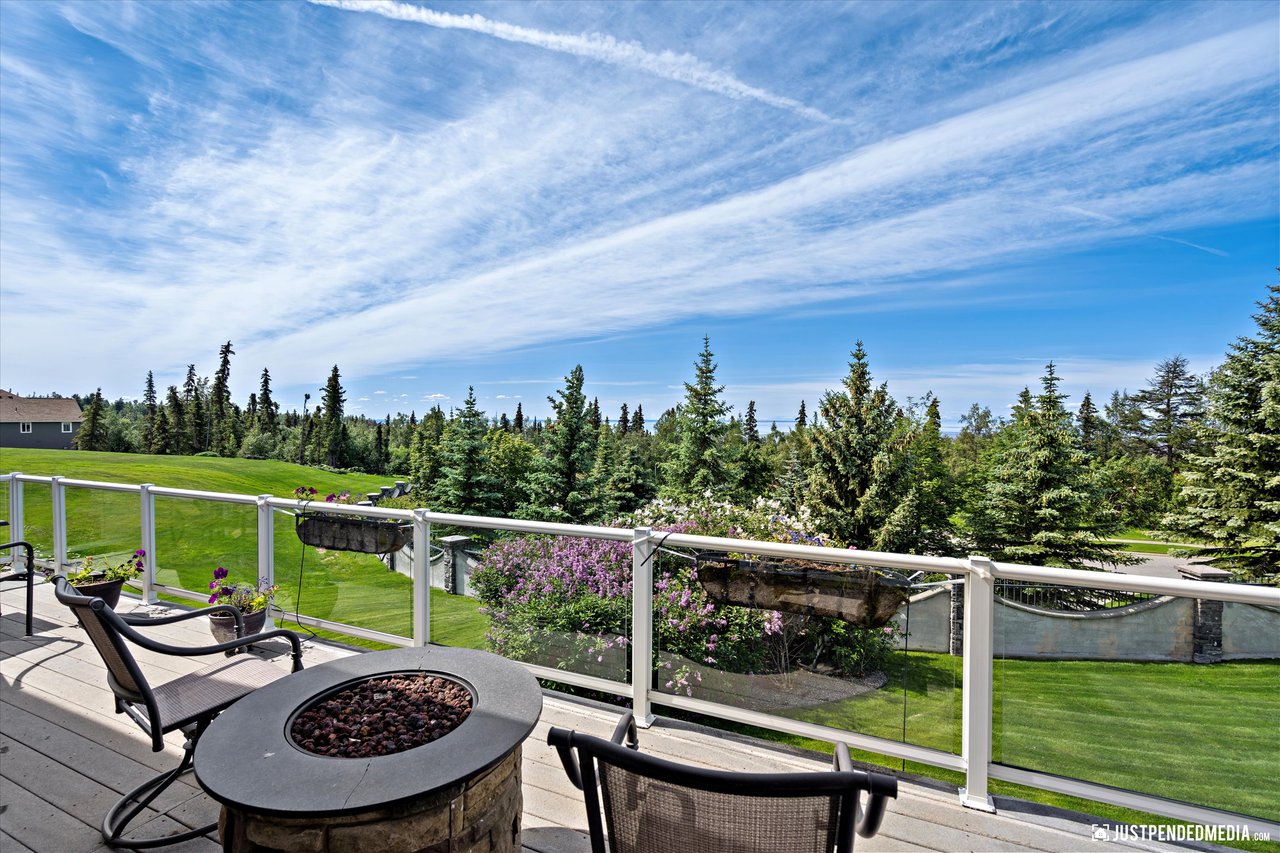
How Hillside Anchorage View Premiums Shape Value
December 18, 2025
December 18, 2025
Ever wonder why two Hillside homes with similar square footage can sell very differently? On Anchorage’s Hillside, what you see from your windows can be just as important as what is inside. If you are buying or selling in 99516, understanding how elevation, sun, and sightlines translate into value can help you make confident decisions. This guide breaks down what a view premium is, how appraisers measure it, and how you can benchmark your own view. Let’s dive in.
A view premium is the portion of a home’s market value that buyers attribute to its sightlines and exposure. In 99516, that often means views of Cook Inlet, downtown Anchorage, the Chugach Range, or a combination of all three. The premium shows up in buyer willingness to pay more compared with similar homes that lack the same view or daylight.
Appraisers treat view as a market-driven characteristic. They look for sales evidence to support any adjustment, not a fixed multiplier. That is why local, recent comparable sales in 99516 matter most when estimating a view’s contributory value.
Higher elevation often increases the chance of long, unobstructed views and a greater sense of privacy. It can also reduce visual intrusion from nearby streets or rooftops. At the same time, steeper lots can come with higher construction, access, and winter maintenance costs, which can offset part of a view premium.
If you are evaluating a lot, consider stability and drainage. Hillside properties can have added perceived risk that affects buyer demand. Checking local slope and landslide resources is a smart part of due diligence when value depends on a view.
Not all views are equal in the market. On the Hillside, common view categories include:
Quality matters as much as category. Distance, framing, and foreground clutter influence desirability. Buyers also consider permanence. A view that depends on neighbor vegetation or a vacant lot can carry uncertainty.
At Anchorage’s latitude, south and southwest orientations receive more direct sun through the year. That added daylight improves livability, can enhance passive warmth in cooler months, and can help with snow melt on driveways and roofs. North-facing or shaded exposures may feel darker in winter, which some buyers discount.
Seasonality amplifies these differences. Anchorage’s short winter days and low sun angle put a premium on southern exposure. In summer, long days and leaf-on conditions can alter what you see from the same window.
Deciduous trees can reveal long sightlines in winter when leaves are off, then soften or block those same views in summer. Evergreen cover provides year-round privacy but can obstruct key views in any season. When you evaluate a property, consider how the view changes over the year and whether pruning or selective maintenance could improve sightlines.
A spectacular view can lose appeal if access feels difficult. Driveway grade, winter driving comfort, road maintenance, and parking all affect buyer utility. Utilities and septic or sewer access also matter on some lots and can influence overall marketability.
Hillside zoning, building codes, and permit rules can limit improvements that would enhance a view, such as expanding windows or building taller decks. Landslide or erosion risk can also affect buyer confidence and insurance costs. When a view is central to value, it pays to understand these constraints upfront.
Appraisers rely on the sales comparison approach. They look for recent sales near the subject property with similar elevation, aspect, lot size, and improvements. The closer the match in view type and quality, the more reliable the adjustment.
The gold standard is a matched-pair analysis. An appraiser finds two very similar sales, ideally within the same micro area, where the primary difference is the view or exposure. The price difference helps isolate the view’s contributory value. When more data is available, appraisers can extract a typical dollar or percentage adjustment from multiple sales.
If a view is partially blocked by vegetation and could be improved with reasonable maintenance, an appraiser might consider cost-to-cure alongside market evidence. Whatever the method, appraisers document photos, map data, and the rationale behind any adjustment.
Using distant or non-analog comps can misstate value, especially on the Hillside where elevation and aspect change quickly. Seasonal photos can also mislead if a summer listing hides winter sightlines or vice versa. Finally, strong listing language without supporting sales data should not drive adjustments.
Buyers balance emotional appeal with practical realities. Some will pay more for unobstructed inlet or mountain views, while others prioritize winter sun, privacy, and easy access. Risk tolerance varies. A dramatic cliff-side vantage might be thrilling to some but too stressful for others who worry about winter access or slope stability.
Market segments behave differently too. High-end or second-home buyers may place a premium on panoramic combinations. Local buyers who commute daily may value a moderate view with better driveway comfort and sunlight during winter.
Use this simple checklist to document your property or a home you are considering:
If you are a homeowner preparing to sell, or a buyer gauging fairness, try to assemble paired or near-paired comps:
A little organization can make your view tangible to appraisers and buyers:
Not all views are equally secure. A view anchored in public land or at an elevation above surrounding structures often feels more permanent. Views that rely on a neighbor’s undeveloped lot or fast-growing trees can carry uncertainty. Buyers typically discount that risk, so it is helpful to understand and communicate what is likely to change.
Industry literature shows that view premiums vary widely by market and view type. Studies often report larger premiums for broad water or inlet views, sometimes running from single-digit percentages into the low twenties in stronger markets. Mountain and skyline views also show positive premiums, commonly in the single-digit to mid-teens range.
These are not one-size-fits-all rules. Anchorage micro-markets can differ block by block. On the Hillside, the most defensible approach is to use recent, local matched pairs to support any adjustment. Treat national ranges as background context, then let 99516 sales data guide your final conclusion.
If you are buying, weigh the full picture. A wide inlet view combined with southern exposure and an easy winter driveway can be worth a stretch, especially if the view is likely to endure. If you are selling, present your view like a feature room. Document sightlines across seasons, highlight sun exposure in winter, and be transparent about access and maintenance so buyers feel confident about what they are getting.
When in doubt, lean on local data. The Hillside’s mix of elevation, aspect, and vegetation is unique, and appraisers will anchor their adjustments in nearby sales. Matching the right comps is the most reliable way to capture a view’s true contribution to value.
Curious what your Hillside view is really worth, or how a specific home compares to recent sales? A tailored set of matched pairs and market context can make the difference between guessing and knowing. If you are preparing to list, professional photos and a clear, season-aware presentation will help buyers see the full value before they step inside.
For a private, data-backed walkthrough of your options, schedule a personal market consultation with Michelle Nelson. You will get founder-led guidance, neighborhood-level insight, and a clear plan to price, market, and negotiate with confidence.
Stay up to date on the latest real estate trends.

Unlock a personalized real estate experience with Michelle’s expert guidance. Whether you're buying, selling, or investing, Michelle is here to provide trusted advice, market insight, and a seamless process from start to finish.